
Okay, everybody. You know I’ve been on a murder-mystery bender lately. (Lately being subjective, I guess?) I’ve been rewatching Only Murders in the Building. I discovered The Thursday Murder Club. I do basically an every-other-year rewatch of Bones and Castle. I grew up reading Nancy Drew books, had a HUGE Harriet the Spy phase, and could never get anyone to play Clue with me at family holidays. There’s something beyond satisfying about untangling a web of secrets, connecting clues that you didn’t think fit together, and arriving at the truth.
We love a good eureka moment here, after all.
I’d never played Type Help, the original itch.io game that The Incident at Galley House is based on, but I’d certainly heard the praise around it. When I learned that the same creative minds responsible for bringing The Roottrees Are Dead to Steam were tackling this remake, I don’t think I’ve ever hit the wishlist button faster.
If you played TR-49 earlier this year, the base mechanic of the game is similar. There’s a machine inside the infamous Galley House, and you’ve been enlisted to use it to figure out what happened in 1936. A group of people were found dead, with seemingly no real ties to each other and no indication as to why everything went down. You’re not given much to go on at first; some photographs, a few names, and a couple of file names to get you used to the system.
And that’s where the fun begins. Every conversation, every memory, and every new bit of information slowly expands your web of knowledge of the house, the victims, and why they were there.
Galley House unfolds in a non-linear fashion. While it begins near the start of the fateful evening, the discoveries you make ping-pong you back and forth through the timeline. Something a character says during supper, near the midpoint of the evening, may be the missing piece to an unanswered thread in hour two. Building the game that way makes each bit of information you piece together feel more organic and less scripted. Few detective games capture the thrill of genuine deduction quite like The Incident at Galley House.
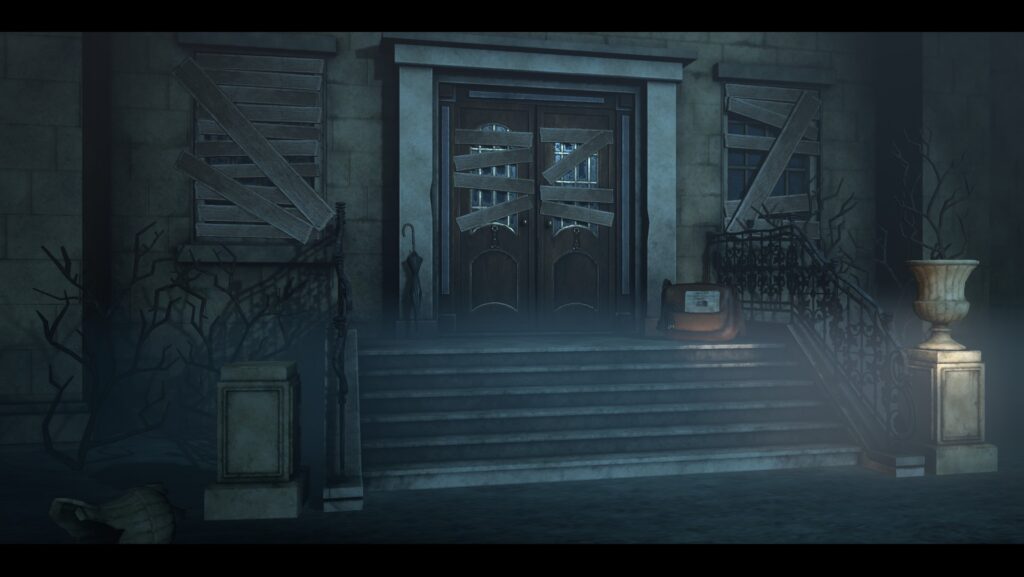
Something that really heightened the mystery for me was the game’s relationship with memory. Without going too far into spoiler territory, nearly every character becomes an unreliable narrator at one point or another. Unreliable narrators are one of my favorite plot devices, especially when used well. If there’s something I’ve learned, memories aren’t objective. They’re shaped by fear, guilt, and perspective. Because of the circumstances happening in the house, you’re forced to question everything you think you know about what’s happening, and what comes out the other side is a mystery that rewards you for being curious. One of my favorite things about The Incident at Galley House is that it’s okay to be wrong.
Every good detective gets it wrong sometimes, right?
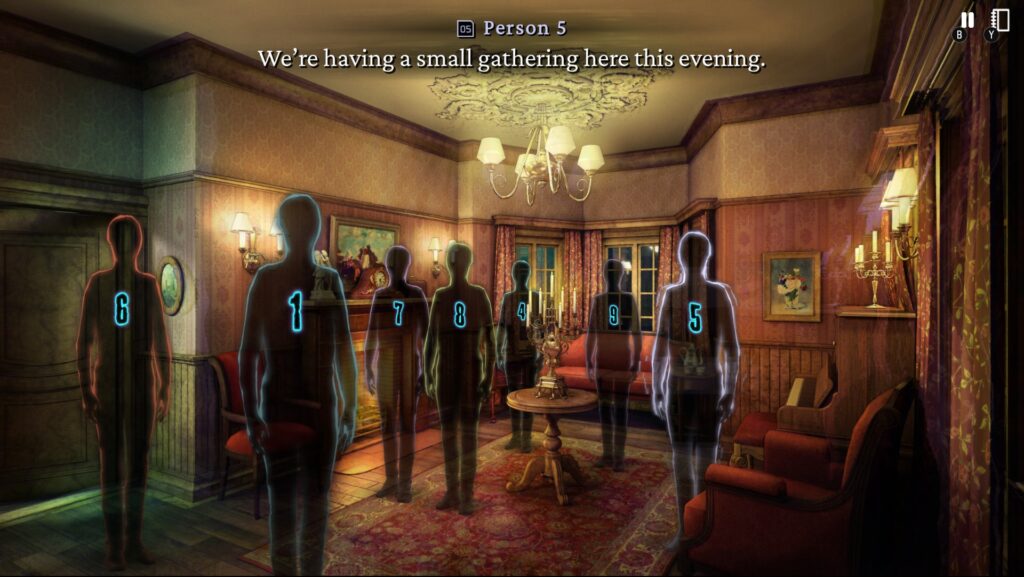
I had a working theories that I assumed, in my arrogance, were correct. Except I kept getting humbled and proved wrong almost immediately. The game doesn’t punish you for taking a wrong turn (or nine); it’s all just part of the process. Even when I found myself stuck, asking for a hint never felt like giving up. The hint system doesn’t just hand over where you need to go next; it reminds you of a few important moments you may have forgotten to jolt your memory before ultimately sending you where you need to go. I loved that approach.
Another mechanic I’d be remiss to call out would be the in-game notebook. Normally, this kind of game has me reaching for pen and paper before long. Still, The Incident at Galley House has a fantastic system for highlighting dialogue and saving observations. It even keeps track of which scene each item came from, making it incredibly easy to go back and revisit things without breaking the flow of the game. It’s honestly one of the best note-taking systems I’ve seen in a mystery/detective game.
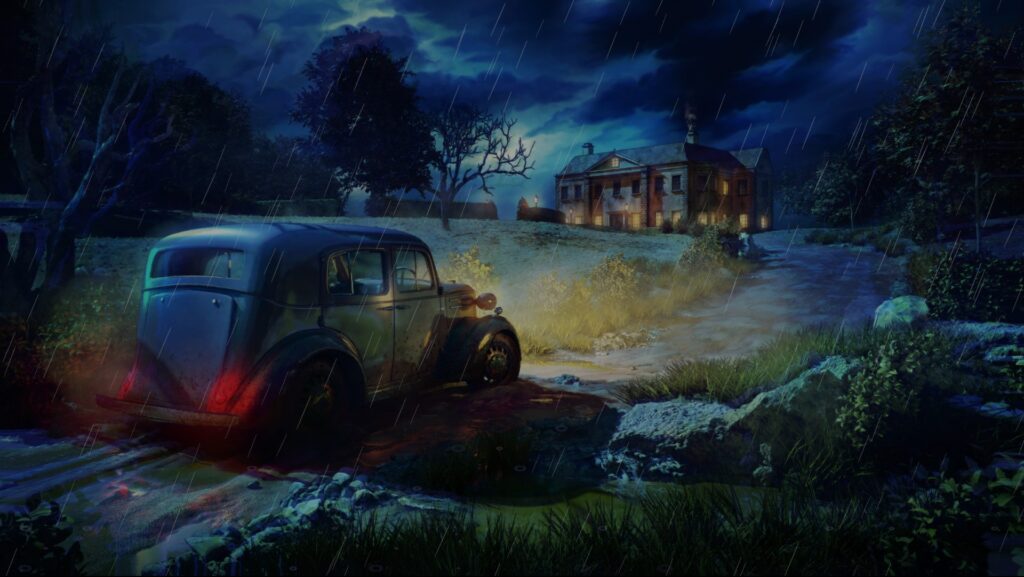
The game itself is also gorgeous. The art backdrops drip with atmosphere, making the house itself feel as mysterious as the people in it. The eerie musical score builds tension throughout the game while never being overwhelming. The fully voice-acted cast, including Andor’s Alastair Mackenzie among others, adds a tremendous amount of personality to every conversation.
I spent the majority of my playthrough on Steam Deck, where the game ran beautifully, even on my older non-OLED model.
If I have one small criticism, it’s that the ending didn’t quite pack the same punch for me as something like TR-49 did earlier this year. That’s not really a fault here, just my personal reflection after having spent a few days reflecting. Even with that, the journey in Galley House is compelling from start to finish, and the fact that it managed to take such a large group of characters and weave the story as well as it did is a credit to original developer William Rous and the team at Evil Trout.
The Incident at Galley House is the kind of detective game that reminds me why I love mysteries, 30 years removed from nights spent with a flashlight under my blanket with Nancy Drew books, building my own Harriet the Spy kit, to begging my extended family to play Clue at holiday events. It’s not a crime to be curious, it’s not a crime to pay attention, and the game understands that for some, the thrill isn’t finding the answer. It’s the puzzle. Sure, my ego took some bruises, but in the process, I left The Incident at Galley House feeling like the cool detective in all my favorite books and other media.